Easy Free Cotton Crochet Dishcloth Pattern for Beginners
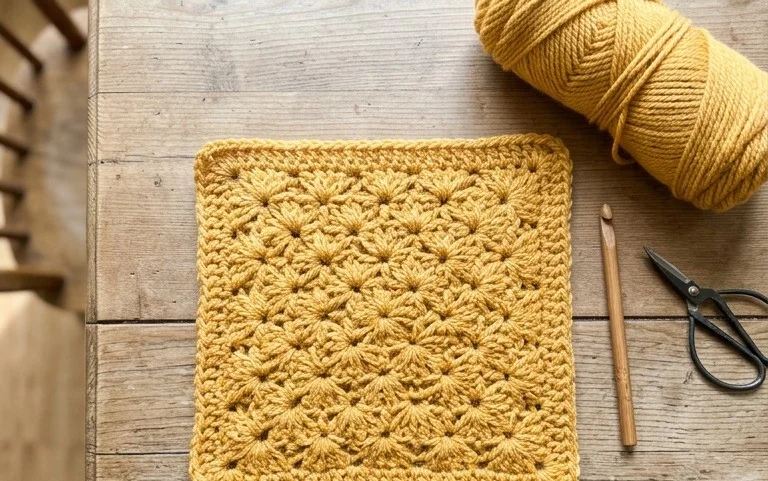
Soft cotton yarn makes a firm, useful dishcloth with a neat, even surface and enough texture for everyday washing. This small rectangle is worked in single crochet, so beginners can settle into a steady rhythm while practicing even edges. It suits anyone who wants a practical project for the kitchen, a quick handmade gift, or a compact make to carry along between errands. You will use one stitch throughout, with straightforward rows that are easy to count and check as you go. The finished cloth is sturdy without feeling stiff, and its simple shape folds neatly in a drawer or gift basket. Along the way, you will find the materials, gauge, and row-by-row details needed to make a cloth close to the stated size, plus tips for measuring and caring for cotton after washing.
Why You’ll Love This Pattern
A firm cotton dishcloth with a plain single-crochet fabric is useful at the sink and straightforward to make. The pattern uses one stitch throughout, so you can focus on keeping the edges even instead of learning a complicated repeat. Its small size also makes it a handy project to take along or finish over a couple of quiet evenings.
One ball of cotton usually provides enough yarn for this cloth, and a partial ball may work if you have at least 100 yards. The simple rectangle is practical for everyday washing, while its compact size makes it easy to fold and store. Make one for your kitchen or as part of a useful handmade gift.
The rows were easy to count, and the cotton made a cloth that feels sturdy without being stiff. I finished it in two evenings.
— Maya, home crocheter
Pattern Overview & Skill Level
- Skill Level: Beginner. You need to know how to chain and single crochet.
- Approximate Time: About 2–3 hours, depending on your pace and how often you pause to check your stitches.
- Construction: A flat rectangle worked back and forth in single-crochet rows. The turning chain does not count as a stitch.
- Finished Dimensions & Sizing: About 7½ by 6 inches (19 by 15 cm) when worked to the gauge below. Cotton can relax with use and washing, so measure after the cloth is dry.
- Gauge: 4 single crochets and 5 rows measure about 1 inch (2.5 cm). Gauge matters less for a dishcloth than for a fitted garment, but matching it helps you estimate the finished size and yarn use.
Materials & Supplies Needed
- Yarn: About 100 yards (91 m) of worsted-weight cotton yarn, commonly labeled medium weight or #4. A solid or lightly variegated color makes the stitches easy to see. Choose a yarn labeled machine-washable if you want simple care.
- Hook: 5.0 mm / H-8 crochet hook. If your fabric feels very stiff, try 5.5 mm / I-9; if it feels loose and floppy, try 4.5 mm / G-6.
- Notions: Tapestry needle for weaving in the ends, scissors, ruler or tape measure, and a stitch marker to identify the first stitch of each row.
- Safe substitutions: A similar-weight cotton or cotton blend is the closest substitute. Linen can make a firm, absorbent cloth but may feel less soft at first. Acrylic is less absorbent and can behave differently with heat, so it is not the best choice for a cloth used near hot cookware. Any change in fiber or yarn thickness can alter the size and texture; check your gauge and expect yardage to vary.
Stitch Guide & Abbreviations (US Terms)
- ch: Chain. Yarn over and pull through the loop on the hook.
- sc: Single crochet. Insert the hook in the stitch, yarn over and pull up a loop, then yarn over and pull through both loops.
- st: Stitch.
- sts: Stitches.
- turn: Rotate the work so you can crochet back across the row.
Turning chain: The ch 1 at the beginning of each row gives you room to turn. It does not count as a stitch in this pattern. Work the first sc into the first stitch of the row, not into the turning chain.
Step-by-Step Pattern Instructions
Dishcloth
Make a starting chain that is loose enough to stretch slightly without bunching. The turning chain is not included in the stitch count.
- Row 1: Ch 31. Sc in the second ch from the hook and in each ch across. (30 sts)
- Row 2: Ch 1, turn. Sc in each st across. (30 sts)
- Rows 3–30: Ch 1, turn. Sc in each st across. Keep the same count of 30 sts in every row. (30 sts each row)
After Row 30, fasten off, leaving a tail of about 6 inches (15 cm). Pull the tail through the final loop. Thread it onto a tapestry needle and weave it through the stitches on the wrong side. Weave in the starting tail the same way, changing direction once so it is less likely to work loose.
Lay the cloth flat and check that the edges are reasonably straight. If it measures notably smaller or larger than about 7½ by 6 inches, check whether your stitch gauge differs from the pattern gauge. A small difference is fine for a dishcloth, as long as the fabric feels comfortable to use and the rows are square enough to lie flat.
Care & Washing Instructions
- Wash cotton in cool or warm water according to the yarn label; avoid hot water if the label does not recommend it.
- Dry flat when possible, smoothing the edges while the cloth is damp.
- Reshape gently by hand after washing; use light blocking only if the rectangle needs its corners straightened.
Pro Tips & Common Mistakes to Avoid
- Keep your tension even: Tight starting chains can pull the bottom edge inward. If your chain feels much tighter than your sc stitches, remake it with a larger hook, then switch back to the 5.0 mm hook for Row 1.
- Count before turning: Check for 30 stitches at the end of every row. Put a stitch marker in the first stitch of each row if you tend to skip it; the last stitch can also be easy to miss when working into the turning edge.
- Hide the tails securely: Weave each end through several stitches on the wrong side, then change direction. Avoid pulling hard, since that can gather the cloth or make a visible ridge.
- Adjust the size deliberately: For a wider cloth, add chains to the starting chain; each added chain gives one extra stitch. For a longer cloth, work more rows. Both changes use more yarn, so have extra cotton on hand and measure as you go.
Frequently Asked Questions
Can I use a different kind of yarn?
Yes. Cotton or a cotton blend gives the most familiar absorbent dishcloth texture. A different fiber or yarn weight changes the drape, absorbency, size, and amount of yarn needed, so make a small gauge check before committing to the full cloth.
How can I make the dishcloth larger or smaller?
Change the starting chain to adjust the width, then add or remove rows to change the length. Keep the same single-crochet stitch and check that the finished fabric lies flat. A larger cloth needs more yarn than the estimated 100 yards.
Is this pattern suitable for a first crochet project?
Yes, if you can make a chain and single crochet. The main challenge is keeping 30 stitches in every row. Use a marker at the first stitch and count the stitches before turning until the row edges become familiar.
May I sell dishcloths made from this pattern?
Check the designer’s terms before selling finished items, and follow any credit or product-description requirements. If you are giving the cloth away, include the yarn’s care information so the recipient knows how to wash it.
Your finished cotton dishcloth is a useful little piece of handmade work, with an even surface and a firm feel that will come in handy at the sink. For a simple variation, change the yarn color or work a few extra rows to make the cloth slightly longer, keeping in mind that the finished size may shift. Cotton softens with washing, so let the cloth dry flat before checking its final measurements. If you make one, share a photo on Pinterest or your favorite social media page; it is always nice to see the colors and sizes other makers choose. When you are ready for another project, browse more free crochet patterns on the blog for practical makes to keep or give.